Bringing the customer onboard early in the automation development process is particularly important. The teams at Volvo Trucks work on a series of small pilots, which are constantly at various stages of completion. These pilots help to establish if a solution is viable in practice, and are ideally road-tested in collaboration with the customer they are being designed for. “We learn fast through quick sprints if a particular solution will help the customer,” continues Mikael Karlsson. “This is a software-driven approach, in which we are looking at taking a broader part of the value chain. As well as working with small pilots, we also use the ‘rubber-band’ analogy, fixing our minds on the future and letting the pilot drag us towards our goal.”
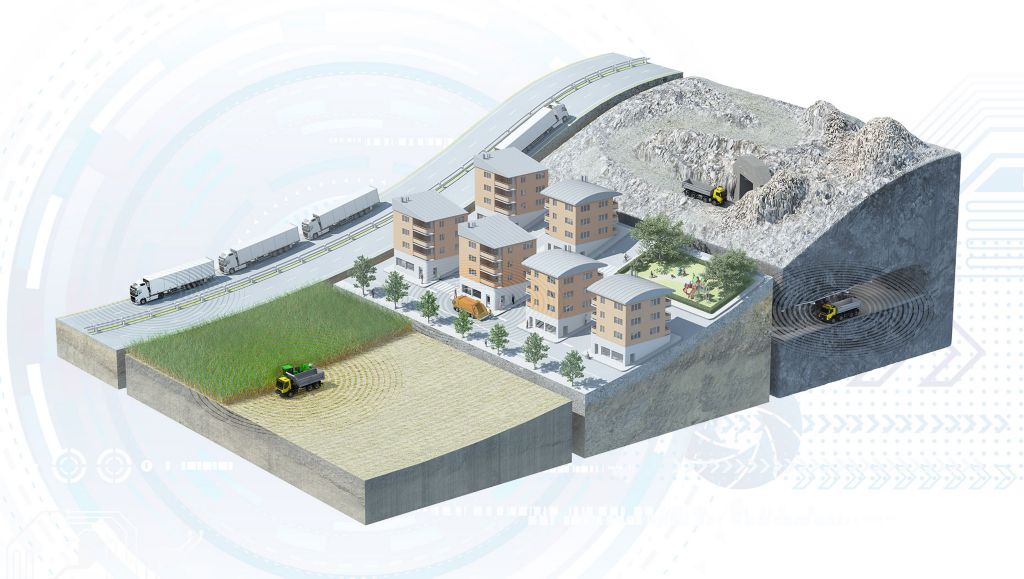
Volvo Trucks’ automation strategy is being developed on two fronts. Firstly they work with confined areas such as mines, private yards and harbours, and secondly onroad. “We believe that a high automation level will be achieved earlier in confined areas, as there is often a less complex traffic system,” says Sasko Cuklev, Director Customer Solutions & New Concepts. “Employing automation on public roads is much more complex. As confined areas are often private land and therefore not subject to restrictions, we are able to test solutions more quickly to capture value. We can learn a lot from confined areas and use the information for public road solutions.”
The emphasis on working on pilots lasting from six months to a year and a half means that the results can quickly be applied and the benefits reaped. Hayder Wokil is Autonomous & Automated Driving Director. “Our work is about where the technology meets the customer benefit. As a starting point, we look at the demands put on customers by their customers. We are focused on solutions that can make difficult, repetitive and time-consuming tasks easier for all concerned. For example, automated technology can be introduced at terminals where a lot of loading and unloading is taking place, and where trucks are doing a lot of reversing. This helps to avoid minor accidents, minimising truck damage and maximising uptime.”